
Cross-Boundary Business Operations

Cross-boundary business operations may encounter corruption risks due to differences in legal systems, social environments, work cultures, and challenges in remotely managing business operations.
A case in point
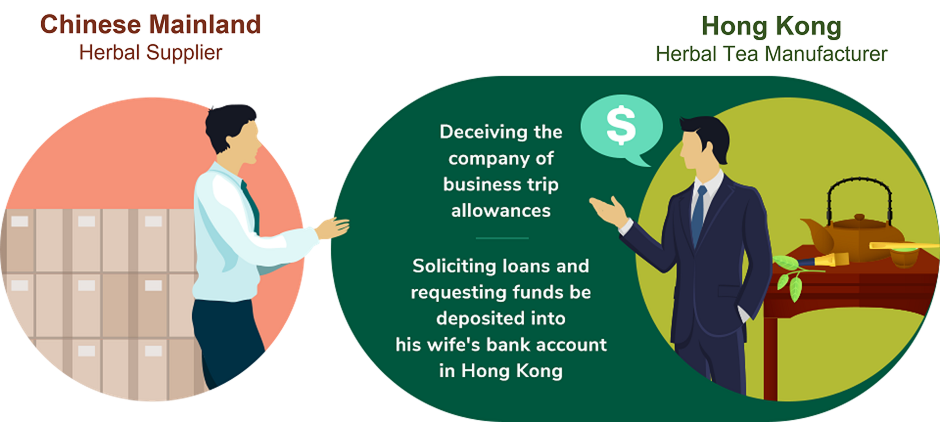
- A senior merchandiser of a Hong Kong-based herbal tea manufacturing company is responsible for purchasing herbal materials from various Chinese Mainland suppliers.
- On several occasions, the senior merchandiser solicits loans from a Chinese Mainland herbal supplier in return for placing purchase orders with the latter.
- He also inflates the expenses incurred in his business trips and furnishes false receipts to deceive the company.
Yes. The senior merchandiser might commit offences under Section 9 of the Prevention of Bribery Ordinance (POBO), which governs corruption in the private sector.
He might violate Section 9(1) of the POBO, because he is an agent (i.e. an employee) who, without the principal’s (i.e. the herbal tea manufacturing company’s) approval, solicits an advantage (i.e. loans) from a supplier as an inducement to perform an act in relation to his principal’s business (i.e. placing purchase orders with the supplier).
He might also violate Section 9(3) of the POBO by using false documents (i.e. furnishing false receipts with inflated expenses) to deceive his principal.
8 Life Hacks for Cross-boundary Business Management:
- If any part of the bribery takes place in Hong Kong, including promising, agreeing, soliciting or accepting advantages without permission, it may still be pursued by the ICAC under the Prevention of Bribery Ordinance (POBO).
- Accepting bribes, whether directly or indirectly (e.g. through a third party), violates the POBO.
- If the corrupt transaction occurs in Chinese Mainland, it may violate the anti-bribery provisions in the Criminal Law and the Anti-Unfair Competition Law of the People’s Republic of China.
- Don’t engage in transactions involving any property if you know, or have reasonable grounds to suspect, that it is linked to criminal or money laundering activities.
- Customs are not a defence. Under the Prevention of Bribery Ordinance (POBO), offering a bribe cannot be justified on the grounds of “an established trade custom” or “trade practice”.
- Employees who frequently accept advantages or lavish entertainment from suppliers or business partners may undermine their objectivity in professional dealings. To safeguard integrity and maintain ethical standards, companies should set clear policies and guidelines regarding the acceptance of advantages and entertainment from business partners.
- Companies should develop their code of conduct in alignment with the legal requirements of the jurisdictions where they operate, as well as their own business practices and operational standards.
- The Private Sector Integrity Centre assists private organisations in formulating or reviewing their codes of conduct. If interested, please submit your request here.
- The Private Sector Integrity Centre offers free anti-corruption and integrity training programmes for private organisations in Hong Kong. Check out the details of the upcoming webinars on PSIC Channel and register now!
- Companies may also use our integrity resources to conduct anti-corruption training for staff based in other jurisdictions.
- The Private Sector Integrity Centre produces a range of integrity resources to help companies remind staff of the importance of upholding integrity.
- Download the Corporate Ethics Health Checklist to quickly assess your organisation’s ethical practices and identify the areas requiring further action or improvement.


