Housing subcontractor team leader gets seven months in jail over $50,000 bribes

A team leader of a bar-bending subcontractor of a transitional housing project in Yuen Long, charged by the ICAC, was today (August 5) sentenced to seven months’ imprisonment at the Fanling Magistrates’ Courts after admitting that he had accepted bribes totalling over $50,000 from a bar-bender in a span of five months for continuing the latter’s employment.

Chan Kong-on, 33, then bar-bending team leader of Long Engineering Limited (Long Engineering), pleaded guilty to seven counts of agent accepting an advantage, contrary to section 9(1)(a) of the Prevention of Bribery Ordinance.

In sentencing, Magistrate Mr Jason Wan Siu-ming remarked that the defendant had exploited the worker over an extended period by taking rebates equivalent to 20 per cent of the latter’s daily wage. The magistrate noted that the serious offences committed by the defendant harmed the worker and undermined social fairness, warranting an immediate custodial sentence of seven months. The magistrate also ordered the defendant to pay over $50,000 - the sum involved in the present case - as restitution.

An ICAC spokesperson noted that the Commission has zero tolerance for corruption, adding that the sentence reflected the gravity of the offences. If construction workers are asked to pay bribes in exchange for employment, they should reject the demand and report it to the ICAC immediately. ICAC’s report corruption hotline: 25 266 366.

The court heard that at the material time, Long Engineering was a bar-bending subcontractor of a transitional housing project at Pat Heung in Yuen Long. The defendant was a team leader at the construction site responsible for recruiting bar-benders, supervising them and distributing pay-cheques to them.

In the five months between October 2023 and February 2024, the defendant accepted seven bribes totalling over $50,000 from a bar-bender under his supervision for continuing the latter’s employment with Long Engineering.

Long Engineering does not allow its employees to accept any advantages in relation to its business or affairs. The ICAC investigation stemmed from a corruption complaint. Enquiries revealed that the defendant solicited a bribe of $500 per day from the bar-bender soon after the latter was employed at a daily wage of $2,450. The bar-bender acceded to the defendant’s request as he believed that he would lose his job if he did not do so.

Long Engineering had rendered full assistance to the ICAC during its investigation into the case.

The prosecution was today represented by ICAC officer Alex Lau.
Cover
Image
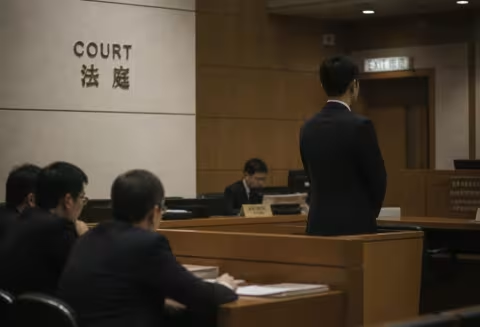
Court proceeding
Import Data

A team leader of a bar-bending subcontractor of a transitional housing project in Yuen Long, charged by the ICAC, was today (August 5) sentenced to seven months’ imprisonment at the Fanling Magistrates’ Courts after admitting that he had accepted bribes totalling over $50,000 from a bar-bender in a span of five months for continuing the latter’s employment.

Chan Kong-on, 33, then bar-bending team leader of Long Engineering Limited (Long Engineering), pleaded guilty to seven counts of agent accepting an advantage, contrary to section 9(1)(a) of the Prevention of Bribery Ordinance.

In sentencing, Magistrate Mr Jason Wan Siu-ming remarked that the defendant had exploited the worker over an extended period by taking rebates equivalent to 20 per cent of the latter’s daily wage. The magistrate noted that the serious offences committed by the defendant harmed the worker and undermined social fairness, warranting an immediate custodial sentence of seven months. The magistrate also ordered the defendant to pay over $50,000 - the sum involved in the present case - as restitution.

An ICAC spokesperson noted that the Commission has zero tolerance for corruption, adding that the sentence reflected the gravity of the offences. If construction workers are asked to pay bribes in exchange for employment, they should reject the demand and report it to the ICAC immediately. ICAC’s report corruption hotline: 25 266 366.

The court heard that at the material time, Long Engineering was a bar-bending subcontractor of a transitional housing project at Pat Heung in Yuen Long. The defendant was a team leader at the construction site responsible for recruiting bar-benders, supervising them and distributing pay-cheques to them.

In the five months between October 2023 and February 2024, the defendant accepted seven bribes totalling over $50,000 from a bar-bender under his supervision for continuing the latter’s employment with Long Engineering.

Long Engineering does not allow its employees to accept any advantages in relation to its business or affairs. The ICAC investigation stemmed from a corruption complaint. Enquiries revealed that the defendant solicited a bribe of $500 per day from the bar-bender soon after the latter was employed at a daily wage of $2,450. The bar-bender acceded to the defendant’s request as he believed that he would lose his job if he did not do so.

Long Engineering had rendered full assistance to the ICAC during its investigation into the case.

The prosecution was today represented by ICAC officer Alex Lau.

Industry Tgas

20260918test

These webinars have NOT been accepted by theLabour Department to claim Continuing Professional Development (CPD) hours forregistered safety officers. For enquiry about the CPD Programmes for registeredsafety officers, please contact the Registration and Staff Training Division ofthe Labour Department (Tel: 2151 3502 or email: dso_rst_3@labour.gov.hk )。


此講座未獲勞工處接納可用作申請註冊安全主任的專業進修時數。如對註冊安全主任專業進修計劃有任何查詢,請聯絡勞工處註冊及職員培訓科 (電話:2151 3502或電郵: dso_rst_3@labour.gov.hk )。
 

Date
Language
Sector / Industry
All Sector / Industry
Off
Course Outline
Corruption prone areas in the construction industry 建造業常見的貪污陷阱
Legal and administrative controls 法例及行政監管
Target
Practitioners working in the construction industry, including office staff from various departments
建造業從業員,包括辦公室及後勤部門的職員
Enquiry
2826 3197 (Ms LEE 李小姐)
Enrolment deadline
Course Full
On
CPD Course
On
Course Title Industry
Course Title Object

Partners in crime

A hotel chief engineer conspired with a spare part supplier by submitting false invoices to the hotel to deceive payment on goods never received.
Cover
Image
Partners in crime
Media Feed Source ID
cases_110_cover_en
fade-up
container

Michael, the chief engineer of the hotel, was responsible for purchasing spare parts for the repair of the hotel’s air-conditioning system.  According to the purchasing policy of the hotel, Michael was required to declare any conflict of interest and obtain quotations from various suppliers for each purchase and recommend a selected supplier to the hotel.

Michael’s high school classmate, Mike, was a spare parts supplier of the hotel but Michael never declared the conflict of interest to the hotel.  They agreed that for each procurement exercise, Michael would first disclose the quotations from other companies to Mike, who would then submit his quotation before the submission deadline.  Mike’s company often won the supply contract with the lowest bid.  In case where no quotations were received for minor purchase items, they falsified multiple quotations, and Mike’s company secured the contracts with the lowest bid.

On the other hand, Mike submitted false invoices to the hotel, falsely claiming that he had delivered all the parts according to the quoted quantities.  In reality, the amount of goods delivered was insufficient and Michael assisted in concealing the under-delivery. 

Case Analysis

Michael is regarded as an agent of the hotel.  Without the hotel’s permission, he accepted rebates from Mike for disclosing quotation information of other bidders to the latter so that Mike could secure the contract at the lowest bid.  Michael might breach Section 9 of the Prevention of Bribery Ordinance (POBO) while Mike might also commit the offence by offering bribes.  Michael conspired with Mike to use false documents to deceive his employer so that Mike could obtain the supply contract, he might breach Section 9(3) of the POBO or other fraudulent offences and Mike might also commit a conspiracy to defraud offence.  Similarly, Mike submitted false invoices to the hotel to conceal the under-delivery and Michael assisted to cover up the matter.  Both of them might commit the offence of conspiracy to defraud.

Michael and Mike were high school classmates which constituted a conflict of interest.  Michael did not declare the conflict of interest to the hotel intentionally and might violate the company’s internal policies.  Employees must adhere to the company’s guidelines and procedures when conducting procurement exercises, including the guidelines on handling conflicts of interest.  They should avoid conflict of interest as far as possible and make timely declarations strictly following the internal guidelines.  Mishandling conflict of interest may distort and cast doubt on the reliability of one’s professional judgement.  On the other hand, companies should implement internal monitoring mechanisms and effective checks and balances to ensure that employees properly follow the procurement policies and goods receiving procedures. 

All Trades/ Industries
Off
migration_resource_id
cases_110
Show Only in Sector/Industry
False
Sector / Industry Priority display

Building a problem

Karson, a Chief Engineer of a hotel, was offered a red packet by the proprietor of a construction company for his assistance in awarding a hotel renovation project.
Cover
Image
Building a problem
Media Feed Source ID
cases_109_cover_en
fade-up
container

Karson, the Chief Engineer of a hotel, was assigned to oversee a $5 million renovation project for the hotel’s main lobby.  Kenneth, the proprietor of a construction company, was selected as the contractor for the renovation work.

During the traditional “God Worshipping” ceremony that marked the project’s commencement, Kenneth offered Karson a red packet of $30,000 as a token of gratitude for his assistance in awarding the contract.  Karson gratefully accepted the offer.

One month later, while inspecting the project’s progress, Karson noticed that the quality of the marble used in the lobby was substandard and did not meet the tender specifications.  Due to the tight schedule and cost implications, Kenneth was reluctant to replace the marble.  To cover up the issue, he proposed giving Karson a rebate of 2% of the project sum in exchange for Karson turning a blind eye to the substandard work.  Although bewildered by the offer, Karson verbally agreed to the arrangement to avoid damaging the harmonious working relationship with Kenneth.

Case Analysis

According to Section 9 of the Prevention of Bribery Ordinance (POBO), it would be an offence if Karson, a hotel employee, without the permission of his employer, accepted an advantage, i.e., the red packet and the 2% rebate of the project sum, for awarding the renovation project to Kenneth and turning a blind eye to the substandard work.  Kenneth might also violate POBO by offering bribes.

According to Section 19 of the POBO, it shall not be a defence to show that the acceptance of advantage is customary in any profession, trade, vocation or calling.  Although the red packet was offered during the customary “God Worshipping” ceremony, the court shall determine the legality based on whether the recipient had obtained the permission from his principal.

Although Karson did not actively solicit advantages and might not have ultimately received any commission from Kenneth, the verbal agreement between the two parties to conceal the substantial work still constituted corruption.  According to Section 11 of the POBO, once an agreement to offer and accept a bribe is reached, both the offeror and acceptor of the bribe shall commit an offence even if the acceptor claims that he did not actually carry out the act as agreed.

Karson might also breach the Rules of Conduct of the Hong Kong Institution of Engineers (HKIE) which states that a member of HKIE shall discharge his duties with integrity and in accordance with the highest standards of business ethics; and neither give nor accept any gift, entertainment, payment or service of more than nominal value, to or from those having a business relationship with his employer or client without the consent of the latter.

All Trades/ Industries
Off
migration_resource_id
cases_109
Show Only in Sector/Industry
False
Sector / Industry Priority display

Bidding low

Alpha, the director of a restaurant group, relied on his engineering expert Ayden to select contractors, but Ayden exploited this trust by soliciting bribes from contractor and manipulating contract sizes to evade oversight.
Cover
Image
Bidding low
Media Feed Source ID
cases_103_cover_en
fade-up
container

A restaurant group operated a chain of ten restaurants in Hong Kong.  The Director of the group, Alpha, was highly experienced in the food and beverage industry but was not familiar with renovation and related issues.  As a result, he relied on his staff Ayden, an expert in engineering, when selecting contractors for the company.  Ayden was authorised to approve renovation works valued up to $300,000 and contracts exceeding $300,000 would require Alpha’s endorsement.

Later, Ayden approached one of the contractors, Andy, and convinced him to offer a 5% commission on the contract price in return for providing Andy with quotation information submitted by other bidders during each quotation exercise.  With this information, Andy constantly secured the contract with the lowest bid.  Ayden also split contracts worth $300,000 or above into smaller contracts to avoid Alpha’s scrutiny.

Case Analysis

According to Section 9 of the Prevention of Bribery Ordinance (POBO), it would be an offence for Ayden, an agent of the restaurant group, without the permission of his principal, to solicit and accept rebates from Andy for providing him with quotation information submitted by other bidders.  Andy might also commit an offence as the offeror of the bribes.  Even if the contracts were not awarded to Andy in the end, once the offering and acceptance of the bribe was established, both of them would be guilty of an offence under the POBO.

Ayden intentionally split contracts to circumvent the established approval procedures, reflecting that the company had not set up an effective checks and balance system.  The company should establish an internal audit team to conduct regular and surprise checks to prevent any non-compliance and detect such irregularities at an early stage.

Additionally, a company should implement an effective quotation system to enable the selection of the most suitable contractor for each project as well as to prevent leakage of tender information.  To minimise the risk of information exposure, all received quotations should remain sealed until the official deadline for submission.  Furthermore, the opening of the quotations should involve at least two authorised persons to prevent any potential tampering with the submitted prices.

As a construction professional, Ayden should not engage in any corruption or malpractice.  Greed not only exposed him to criminal liability but also jeopardised his professional career.

All Trades/ Industries
Off
migration_resource_id
cases_103

Delegation of site supervisory duties

Being heavily tied down by office work, the plant engineer assigned his technical assistant to carry out the inspection duties, which however were not performed properly.
Cover
Image
Delegation of site supervisory duties
Media Feed Source ID
cases_079_cover_en
fade-up
container

The duty of a plant engineer in a manufacturing company was to ensure proper consumption and disposal of chemicals used for production.  Being tied down by paperwork, the plant engineer seldom had chance to conduct on-site supervision over the workers in the factory.  To ease the problem, he assigned a technical assistant to carry out the inspection for him.

When several chemical workers had developed serious skin problems and complain about the hostile working environment, the plant engineer began to realize that some of the workers had continuously misused the chemicals. Worse still, chemical wastes were not properly disposed of and might have leaked to a river nearby through the drainage of factory without treatment.

Case Analysis

The plant engineer breached the Rules of Conduct of the Hong Kong Institution of Engineers by failing to discharge his supervisory role with due diligence and care, resulting in chemical pollution to the environment and potential safety and health hazards to the workers and the public.

To comply with the standard, the plant engineer should accept responsibility for his actions and have the supervisory control tightened up. He should ensure that the persons to whom he delegates the authority are sufficiently competent to carry out the associated responsibility.

All Trades/ Industries
Off
migration_resource_id
cases_079

Accepting bribes to act against regulation

A supervising officer of a construction company solicited bribes from a tenderer for leaking out quotation information.
Cover
Image
Accepting bribes to act against regulation
Media Feed Source ID
cases_078_cover_en
fade-up
container

Construction company A was planning to carry out a large-scale residential development project on a piece of land in the North East of the New Territories that was owned by the company. The company decided to select a contractor by open tender.

Mr Lee, one of the supervising officers of Company A, was responsible for overseeing the project. By virtue of his position, Mr Lee had access to the business secrets, including the quotation prices offered by other tenderers and recommendations given by the consultancy company.

During the tendering process, Mr Lee arranged to have a meeting with Mr Ho, who was employed by one of the tendering companies. Mr Lee claimed that he could disclose business secrets concerning the project to Mr Ho on the condition that Mr Ho’s company, after winning the contract, would pay him 2.5% of the project construction cost, which would bring him an estimated reward of HK$2 million.

Following disclosure of the bribery scam, Mr Lee was arrested and found guilty of corruption crime.

Case Analysis

By soliciting an advantage and leaking the quotation information to Mr Ho, Mr Lee might have committed an offence under Section 9 of the Prevention of Bribery Ordinance. Meanwhile, Mr Ho might also have committed an offence by offering bribes. The section (Section 9) states that:

  • an agent (normally an employee) solicits or accepts an advantage without the permission of his principal (normally the employer) when conducting his principal’s affairs or business commits an offence; and
  • the person who offers the advantage also commits an offence.

A company should establish a good quotation and tendering system to enable the selection of the best contractor for the job required.  A good quotation/tendering system should prevent tender and quotation information from leakage.  Quotations or tenders received should not be opened before the deadline to reduce the likelihood of information leakage.  Furthermore, the opening of the tenders and quotations should be carried out by at least two persons to prevent tampering with the prices submitted

All Trades/ Industries
Off
migration_resource_id
cases_078
Survey Questions
1. In which country or region are you currently located?
Hong Kong
Chinese Mainland
Other (please specify)
2. What type of organisation do you represent?
Listed company
Large private company
SME / start-up
NGO / non-profit
Public organisation
Chamber / trade association
Other (please specify)
3. What is the size of your organisation?
1 - 49 employees
50-99 employees
100 - 199 employees
200 or more employees
4. What is your staff level or position?
Executive / senior management
Middle management
Professional
Supervisory level
Frontline/Technical Staff
Other (please specify)

Thank you for your feedback.