Corruption Prevention through Digitalisation
Digitalisation is widely recognised as a powerful tool in corruption prevention. Automation reduces reliance on manual processes, data analytics enhances transparency and risk detection, and embedded system controls strengthen governance and oversight. Our work in this area dates back to the 1980s.
Digitalisation Timeline
CPD provides advice for major computerisation projects across government departments, ensuring that corruption prevention controls are in place during the transition from manual systems to digital processes.
Through regular procedural reviews, CPD advises government departments to adopt digitalisation to strengthen controls in their processes.
Digitalisation for Corruption Prevention was formalised as a key strategy, recognising technology as a critical enabler of systemic integrity.

Developed the Digital Corruption Prevention Framework, providing guiding principles for government departments to leverage technology to strengthen corruption prevention.
Advanced implementation through digital tools and AI proof‑of‑concept projects.
Launched the Coding4Integrity Asian Youth Anti‑Corruption Hackathon, promoting youth empowerment, cross‑border collaboration, and innovative technology solutions for integrity challenges.

Developed the Integrity Assurance Standards for Computer System to provide practical guidance to organisations on integrating integrity controls into IT systems by design.
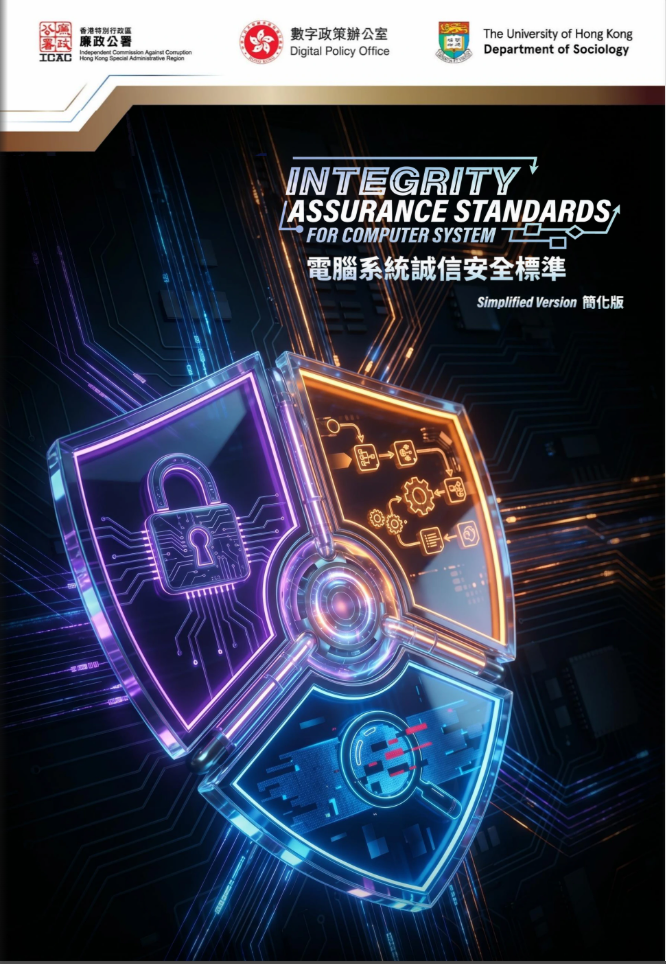

The Integrity Assurance Standards for Computer System sets out 12 Functional Corruption Prevention Requirements for computer systems to prevent and mitigate corruption risks. These controls are grouped under three key control areas.
System Security
Safeguarding the system's core functions
Ensure the system operates securely to provide stable public services and enable secure, appropriate information sharing across organisations to support effective decision‑making.
Workflow Controls
Integrating integrity into digital workflows
Integrate control measures into system workflows and automate tasks to enhance compliance and minimise human intervention.
Anomaly Detection
Enabling early identification of irregularities
Maintain and analyse audit logs to ensure traceability, and monitor system activities to enable early detection of unusual or suspicious behaviour.
Click here to learn more about the Standards, and here to download the guide for detailed information.
What's New
View All News